
According to News JP, Yukari Sakamoto’s White Flower Fruit is emerging as one of the most talked-about Japanese films of the season, drawing international attention even before its nationwide theatrical release. The film, which opened in Japan on Friday, December 26, positions Sakamoto as a director to watch and introduces a striking new lead performance that is already resonating with audiences abroad.
Sakamoto first attracted notice for directing “Reborn,” a segment of the 2019 omnibus series 21st Century Girls. Since then, her reputation has steadily grown, both in Japan and overseas. Now, with Shiro no Kajitsu (White Flower Fruit), her first full-length feature, she takes a confident step forward. The film was selected as the closing title in the New Directors section at the 73rd San Sebastian International Film Festival in Spain, where it received sustained applause and strong critical interest. That response alone signals that this is not a quiet debut destined to pass unnoticed.
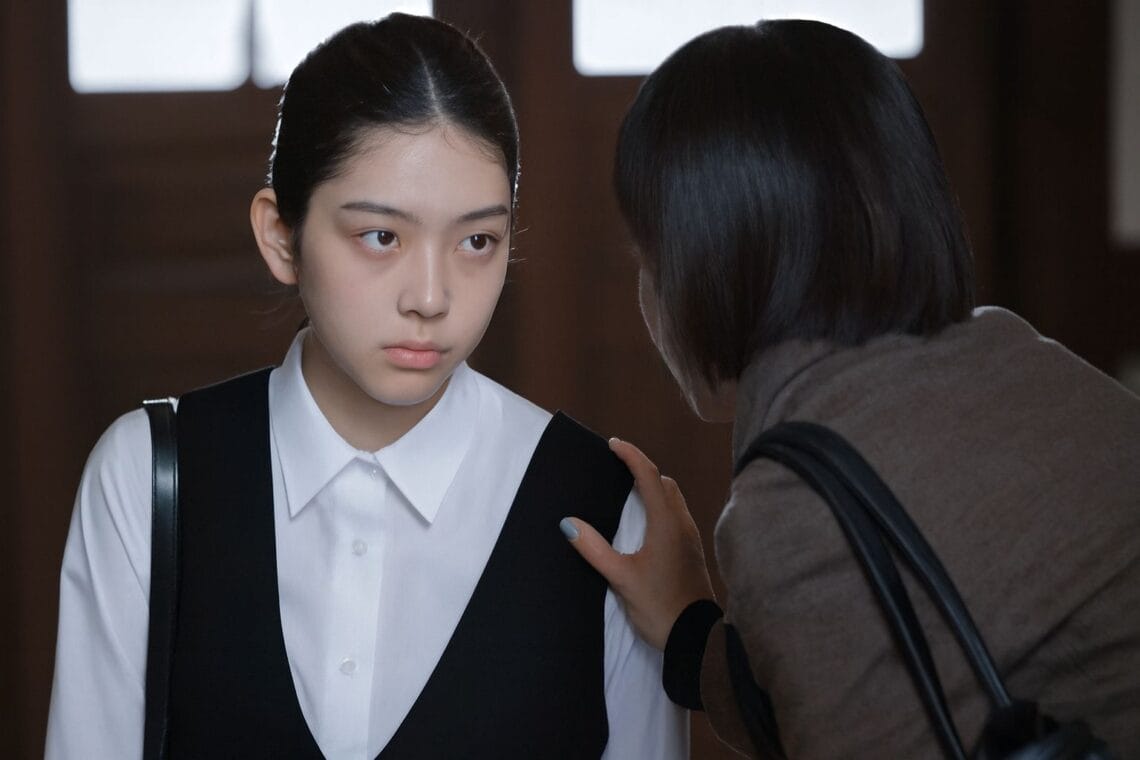
Adding to the momentum, newly released stills from the film have deepened public curiosity. The images focus on the protagonist Anna, played by newcomer Miro, and they highlight the emotional range that defines the character. In one photo, Anna smiles softly while chatting with her roommate Rika, played by Aoto Nijiko, capturing a fleeting sense of youth and intimacy. In another, she kneels by a lakeside, gazing upward as if searching for meaning beyond what words can explain. A third image shows her staring straight ahead with unmistakable resolve. Although Anna wears the same school uniform in every shot, each expression creates a completely different mood, reinforcing how much of the film’s storytelling lives in subtle shifts of feeling rather than overt action.
Miro’s casting is a story in itself. Before this film, she was best known as a model, appearing in major brand advertisements and music videos. She featured in commercials such as Suntory Tennensui Sparkling Lemon alongside Shingo Katori and appeared in acclaimed music videos including BUMP OF CHICKEN’s “Gravity” and ASIAN KUNG FU GENERATION’s “Starry Night, Hikari no Machi (feat. Rachel & OMSB).” Despite this visibility, White Flower Fruit marks her first serious acting role and her first time leading a feature film.
The role of Anna was decided through auditions, and Sakamoto has openly explained why Miro stood out. One audition scene required a heated argument between Anna and her mother. According to the director, the emotional force Miro brought into that confrontation was decisive. When asked to repeat the scene with adjustments, Miro responded instantly, without hesitation or visible fear. Sakamoto has said that this quick intuition and emotional honesty felt essential for Anna, a character who must communicate strength and vulnerability even in silence.
- The Most Iconic K-Drama Couples of All Time

- K-Drama Without Romance: A Fresh Take on Korean Entertainment

- Netflix Confirms Production of ‘Scandal’ Starring Son Ye-jin, Ji Chang-wook, and Nana

Miro herself has spoken candidly about approaching the role. Rather than trying to act in a conventional sense, she focused on identifying similarities between herself and Anna. Although it was her first time acting in a full film, she embraced the experience as a chance to live a life different from her own. That openness translates directly to the screen, where her performance feels unforced and grounded.
Within the story, Anna is a high school student who can see ghosts and speak with them. Interestingly, this supernatural ability does not define her through fear or spectacle. Instead, Anna treats it as part of her everyday life. Her calm acceptance sets her apart from her classmates, who keep their distance, including Shiori, played by Ikebata Anji. This emotional isolation becomes a key theme, explored not through exposition but through mood, silence, and facial expression.
Sakamoto has emphasized that Anna needed a presence capable of communicating without dialogue. For that reason, Miro’s expressive face played a major role in her casting. On screen, Anna carries a quiet core strength that does not demand attention, yet it holds the frame whenever she appears. At the same time, the film introduces moments of fragility, particularly through her relationship with Rika, whose sudden rooftop jump adds an unsettling emotional layer. These contrasts give the film its lingering impact.
Read more: Japanese pop culture stories and J-pop highlights here.
Despite being a debut performance, Miro has already earned praise at international film festivals, with San Sebastian standing out as a major milestone. Viewers and critics alike have noted her natural screen presence and emotional clarity, qualities that often take years for actors to develop. As a result, White Flower Fruit does not feel like a tentative first step, but rather like the introduction of a performer who understands restraint and depth from the very beginning.
Now screening nationwide from December 26 at theaters including Shinjuku Musashinokan and Human Trust Cinema Shibuya, White Flower Fruit arrives as a quiet yet confident work. Distributed by Bitters End, the film reflects Yukari Sakamoto’s understated direction and her trust in atmosphere over excess. For audiences looking for a thoughtful, emotionally resonant Japanese film, this release offers both a compelling story and the emergence of a new creative partnership worth following closely.
Source: News JP

